Pre-Treatment for Pigment Printing on Cotton Fabric: When Is It Needed and What Does It Deliver?
Pigment ink can be printed on cotton without pre-treatment, but some of the color is drawn into the fiber and turns dull once dry. We explain what pre-treatment does to the fabric, which jobs need it and what the right workflow looks like.
The answer to “Can pigment ink be printed without pre-treatment?” is yes. The answer to “Should I print without pre-treatment?” depends on the work you do. In this article, we explain exactly what pre-treatment does to the fabric and when it is worth the investment.
How are textile inks fixed to fabric?
Digital textile printing uses five main ink families, and each has its own fixation method:
- Reactive: forms a chemical bond with cellulosic fibers such as cotton, viscose and linen.
- Acid: used on protein and polyamide fibers such as wool, silk and polyamide.
- Disperse and sublimation: migrate into the polyester fiber with heat.
- Pigment: does not form a chemical bond with the fiber; it adheres physically to the fiber surface thanks to the binder.
This physical bond, which sets pigment apart from the others, is the source of both its biggest advantage (no steaming or washing) and its need for pre-treatment.
How do we measure print quality?
Before discussing the effect of pre-treatment, we need to make the criteria clear. Whatever the method, a printed fabric is evaluated on these criteria:
- Color yield and vibrancy
- Wash fastness
- Dry and wet rub fastness
- Perspiration and light fastness
- Hand feel, i.e. how the printed area feels to the touch
- User safety of the inks and chemicals
Pigment inks are strong in light fastness thanks to their fade-resistant color particles. Today's formulations also deliver reliable wash and rub fastness. The two areas where they can fall short are color yield on cotton without pre-treatment and hand feel in heavy-coverage prints.
What happens on cotton without pre-treatment?
Cotton is a porous, absorbent fiber. When printed without pre-treatment, the water in the ink, and some of the pigment with it, is drawn into the fiber and between the fibers. The print looks vivid while wet; as it dries, the amount of color left on the surface decreases, producing a duller, more faded appearance. On some fabrics, slight bleeding is also visible at the edges of fine lines.
What does the pre-treatment chemical do to the fabric?
- It keeps the ink on the surface. It limits the fiber's absorbency; the color stays on the surface and the same ink gives a more saturated result.
- It improves sharpness. It reduces the lateral spread of the ink; fine lines and small text become crisper.
- It supports fastness. Depending on the pre-treatment formulation, the binder adheres more strongly to the fiber surface; wash fastness and dry and wet rub fastness improve.
- It saves ink and passes. The same color density is reached with less ink, and in some jobs with fewer passes. This lowers both cost and print time; with pigment, less ink also means a softer hand feel.
Fabric first: it must be prepared for print
Pre-treatment will not rescue poorly prepared fabric. PFP (prepared for print) fabric is fabric that has been cleaned of the size, oil, wax and finish residues used during weaving and knitting. These residues prevent both the pre-treatment chemical and the ink from adhering to the fiber surface.
In practice, three things are checked: consistent absorbency from batch to batch, no oil or silicone finish left on the surface, and fabric that arrives evenly wound without being stretched. Running a small test print on the first batch from a new supplier catches early any color differences that would otherwise appear later.
The right workflow
- Fabric inspection: width, absorbency and surface cleanliness.
- Pre-treatment application: even distribution of the chemical across the full width of the fabric.
- Drying and winding: complete drying and even winding of the pre-treated fabric.
- Printing: with a color profile and number of passes suited to the fabric.
- Heat curing: at the temperature and for the time specified by the ink manufacturer.
- Testing: wash fastness and dry and wet rub fastness.
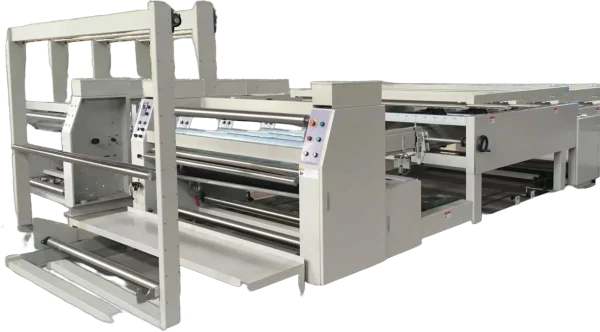
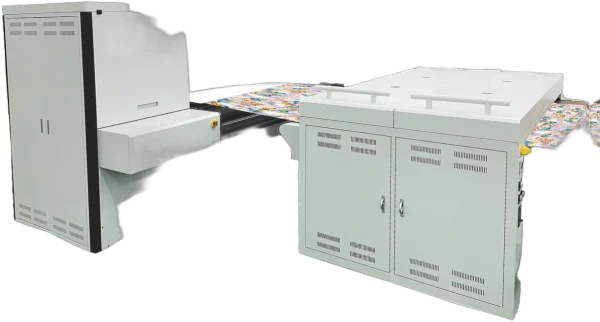
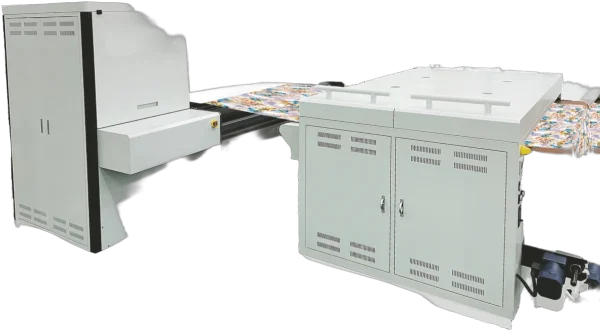
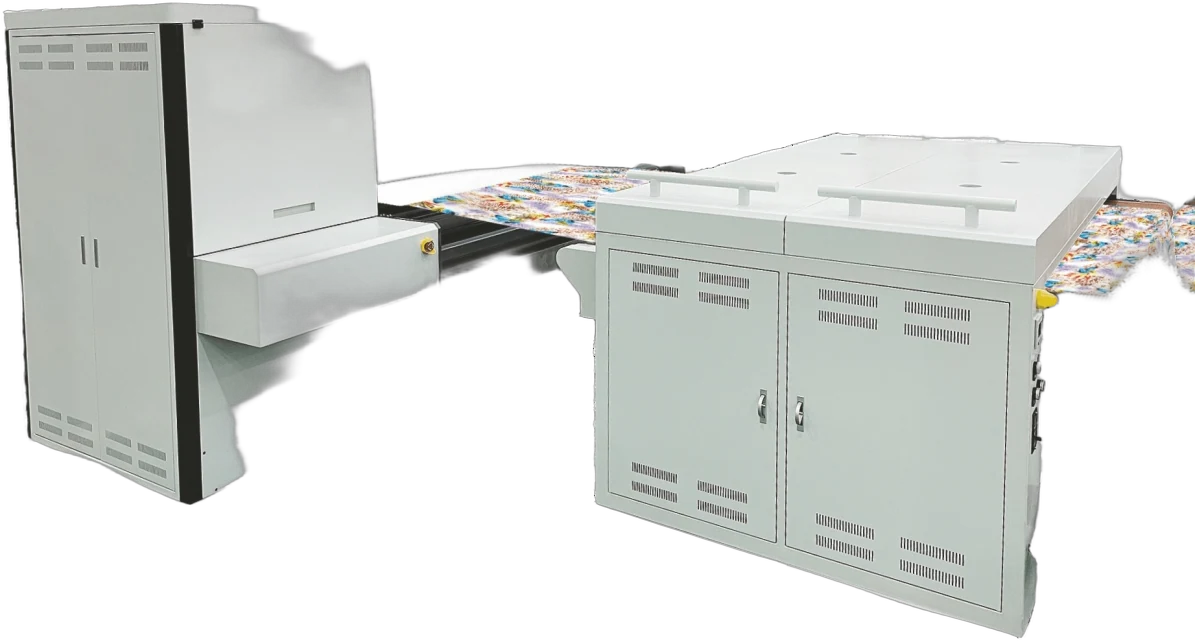
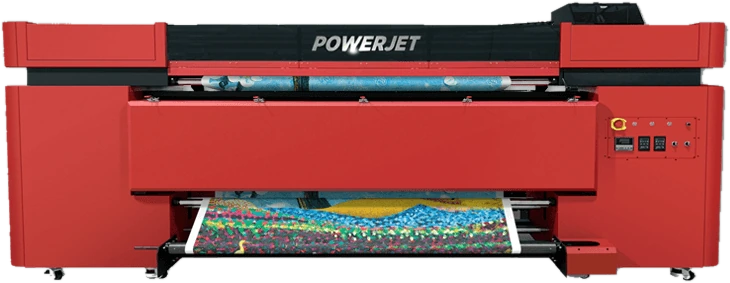
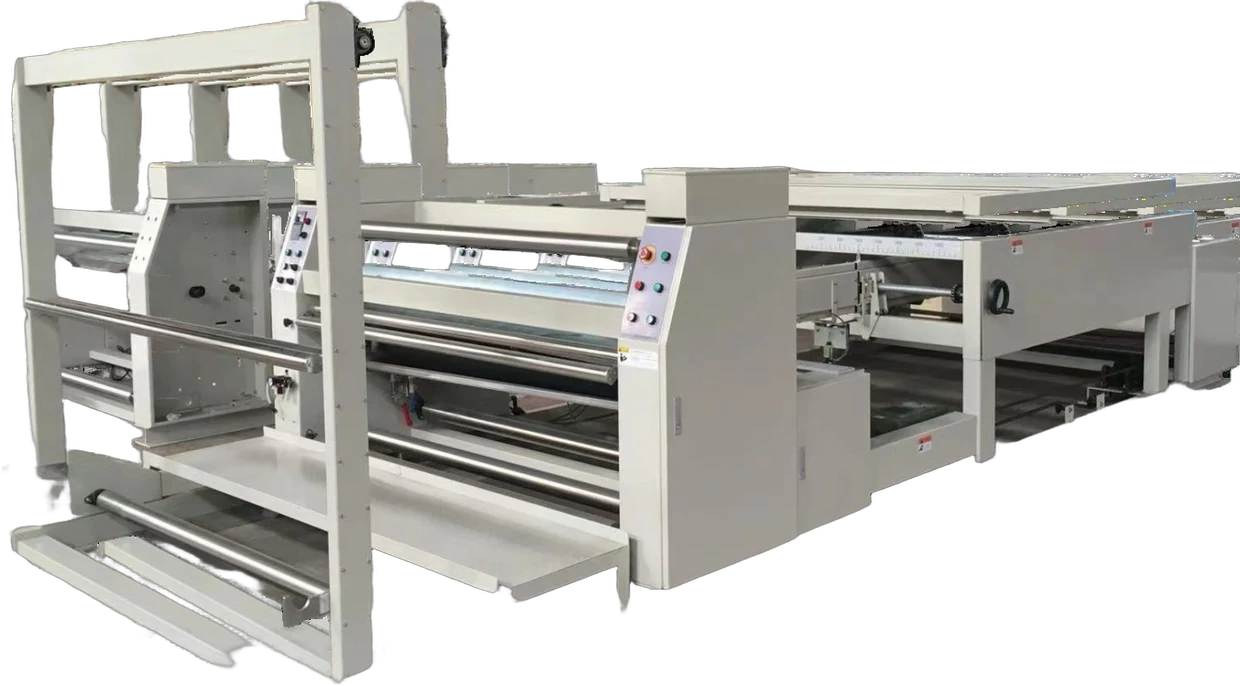
Combining the first three steps in a single machine simplifies the line. The Powerjet 190S-260S pre-treatment unit applies pigment-based pre-treatment to the fabric, dries it and winds it onto a roll for printing; it is compatible with 190 cm and 260 cm lines. Printing then takes place on the Powerjet 190 or Powerjet 260, and fixation is completed in the fixation unit. This workflow, too, involves no steaming or washing.
When is pre-treatment essential, and when is it not?
| Job | Pre-treatment | Why |
|---|---|---|
| Light-ground, pastel design | Usually not needed | At low ink loads, the color difference stays limited |
| Saturated and dark colors | Recommended | Color yield and depth increase noticeably |
| Apparel fabric, high rub fastness expectations | Recommended | Supports wet and dry rub fastness |
| Fine lines, small text, logos | Recommended | Edge bleeding is reduced and detail becomes sharper |
| Fast sampling and design approval | Optional | After approval, series production should be compared on pre-treated fabric |
Common pre-treatment mistakes
- Uneven application: color differences and clouding between the edges and the center of the fabric.
- Too much chemical: stiffness and poor hand feel in the printed area.
- Incomplete drying: ink spreading during printing and moisture close to the printhead.
- Storing pre-treated fabric in a humid, dusty environment: surface contamination and changes in absorbency.
- Relying on pre-treatment and shortening curing: pre-treatment does not replace curing; curing determines fastness.
The quickest way to see how much pre-treatment changes your fabric is a side-by-side print. Send us your fabric; we will print the same design with and without pre-treatment and send it back cured.
Frequently asked questions
Is pre-treatment required for pigment printing?
No; pigment ink can be printed directly onto prepared-for-print fabric. Pre-treatment is applied when color vibrancy, sharpness and rub fastness matter, especially on cotton and in dark colors.
Does pre-treatment affect hand feel?
Applied in the right amount, it can improve hand feel, because less ink is needed for the same color. Too much chemical, however, stiffens the printed area.
Does pre-treated fabric still need curing?
Yes. Pre-treatment keeps the ink on the surface, while curing allows the binder to form a film. Curing determines wash fastness.
Does pigment printing with pre-treatment involve steaming and washing?
No. Pigment-based pre-treatment also requires no steaming or washing; the workflow consists of pre-treatment, drying, printing and curing.
Is pre-treatment also used in T-shirt (DTG) printing?
Yes, especially on dark T-shirts. A pre-treatment liquid is applied before printing so that the white ink stays on the fabric surface and forms an even base. On light-colored T-shirts it is usually not needed.