Choosing a Printhead for Pigment Printing on Cotton: Ricoh, Epson and StarFire
The printhead determines a machine’s speed, detail sharpness and operating cost all at once. We explain the six criteria to consider when choosing a printhead for pigment printing on cotton, and where Ricoh, Epson and StarFire heads each excel.
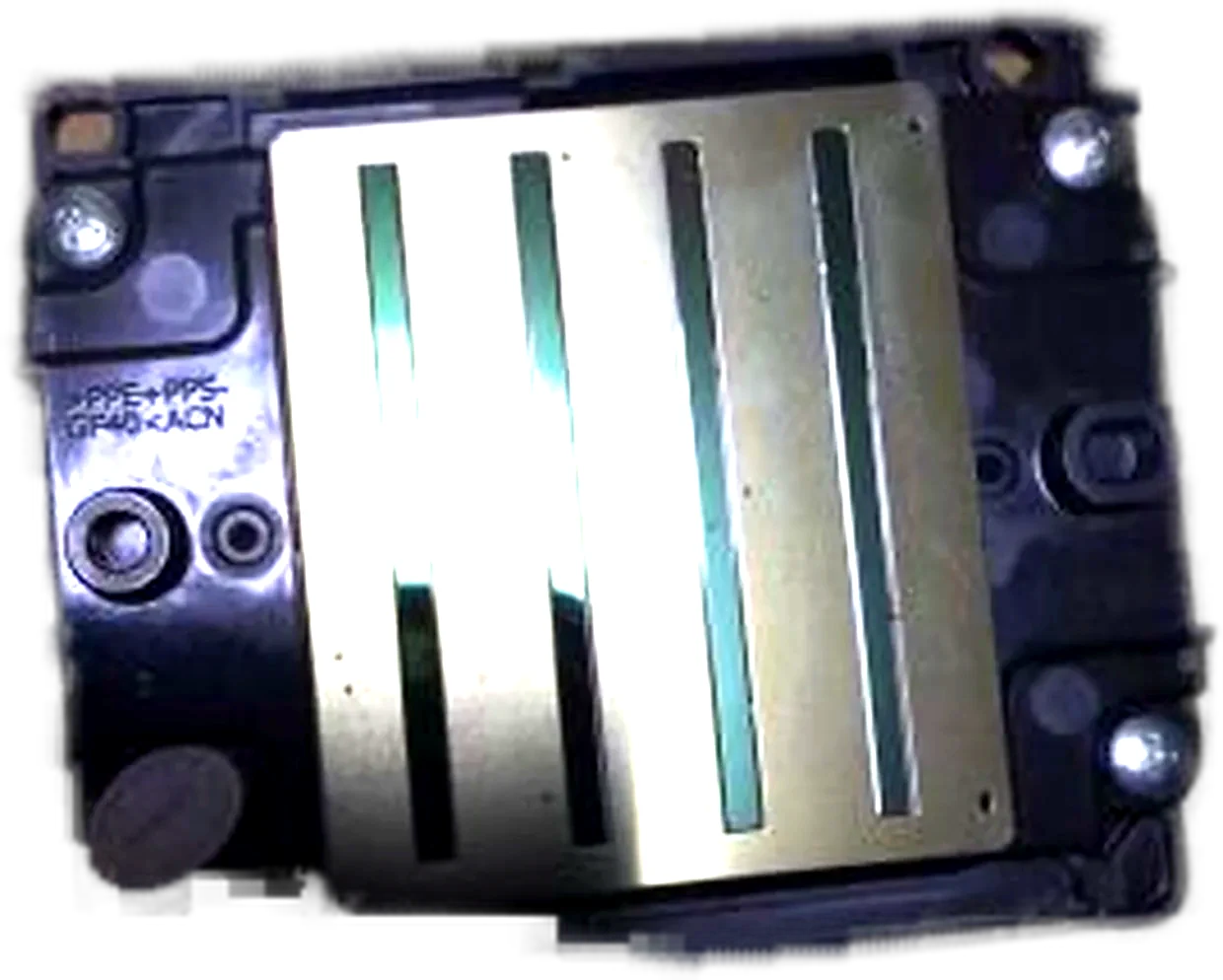
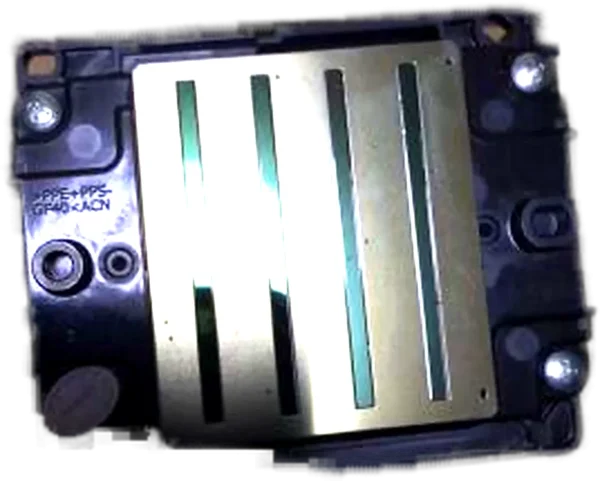
In a digital printing machine, the component that sets the quality limit, determines the speed ceiling and is the most expensive spare part is one and the same: the printhead. Because pigment ink carries solid color particles and binder, printhead choice matters even more in pigment printing. If the binder dries at the nozzle opening, it causes clogging; that is why the head's design, ink circulation and maintenance routine are at least as important as resolution.
Six criteria for choosing a printhead
1. Drop size and gray levels
Drop volume is measured in picoliters (pl). Small drops give cleaner results in fine lines, small text and light tones; large drops fill wide, saturated areas quickly. Today most industrial printheads can fire drops of different volumes from the same nozzle. This is called grayscale; we explain it in detail in our grayscale article.
2. Nozzle count and head width
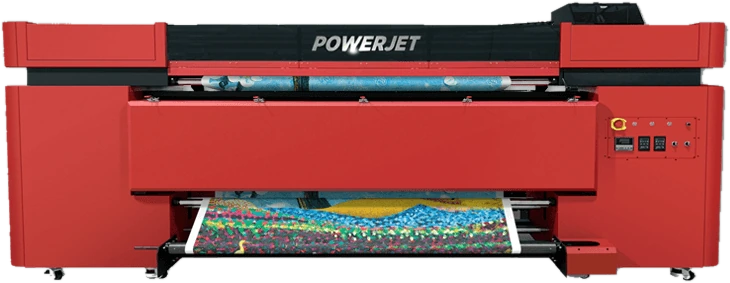
Speed is determined by the nozzle count, the width a head covers in a single pass and the nozzles' firing frequency. Adding more heads to the same machine also raises speed directly. For example, the Powerjet 190 roll-to-roll printer can be configured with 4, 8 or 16 heads.
3. Industrial durability
Roll-to-roll printing runs on long shifts. Heads with metal bodies, high chemical resistance and a design built for continuous operation stand out here. Heads adapted from office printers may look cheap at first, but on long shifts they bring the cost of frequent replacement.
4. Ink compatibility
The same head family may come in separate versions for water-based, solvent and UV inks. Pigment textile ink is water-based, so you should choose the version of the head approved for water-based ink. On the Epson I3200, this is indicated by the code at the end of the model name: A1 is for water-based, E1 for eco-solvent and U1 for UV ink.
5. Lifetime and maintenance
Printhead lifetime cannot be given as a single number; it depends on ink quality, ambient temperature and humidity, daily cleaning and whether the head takes any impacts. That is why the printhead is a consumable part excluded from the machine warranty.
6. Repair and spare part availability
When a head fails, how many days the machine will stand idle can matter more than the head's technical specifications. Before buying, ask whether the head can be repaired, whether it is held in local stock and whether it comes through an official channel.
Three head families side by side
| Ricoh (MH5420 and MH5320 family) | Epson I3200 | Fujifilm Dimatix StarFire SG1024 | |
|---|---|---|---|
| Nozzle count | 1,280 (4 × 320) | 3,200 | 1,024 |
| Print width per head | 54.1 mm | Depends on model | Depends on model |
| Smallest drop | 7 pl (MH5420) · 5 pl (MH5320) | Varies by model and mode | 12 pl (SA model); larger on the MA and LA versions |
| Grayscale | Yes (multi-drop) | Yes (variable drop) | Yes (VersaDrop) |
| Ink | Compatible with water-based, solvent and UV | Separate version per ink type (A1, E1, U1) | Water-based, solvent and UV versions |
| Service | Usually full replacement | Usually full replacement | Presented by the manufacturer as repairable; the nozzle plate can be replaced |
The values in the table are based on information published by the head manufacturers. The same head can be run with a different drop range and speed depending on the machine and its driver electronics; always complete the comparison with the machine's own specification sheet.
Which head excels where in pigment printing on cotton?
Industrial roll-to-roll production: Ricoh
Their metal construction, suitability for long shifts and compatibility with water-based ink have made Ricoh heads the standard in roll-to-roll pigment printing. The Powerjet 190 and Powerjet 260 run on Ricoh Gen 6 heads and, depending on the number of heads and colors, reach up to 560 m²/h in 2 passes.
T-shirts and fine detail: Epson I3200-A1
Its high nozzle count and small drop make the Epson I3200-A1 strong for printing on finished garments. The Powerjet DTG 4T PRO prints up to 160 T-shirts per hour with 8 Epson I3200-A1 heads in two independent units.
Wide width and multiple ink types: 320 cm with Epson I3200
The Powerjet FP 3200 prints 320 cm wide at 180 m²/h with 4 Epson I3200 heads, and works with reactive, disperse and acid inks as well as pigment. Its specification sheet lists 3,200 nozzles per head and a drop range of 1.5–21 pl.
Coarse designs and high ink loads: large-drop heads
For jobs such as carpets and heavy fabrics, which need no fine detail but require a lot of ink on the surface, large-drop heads have the advantage. In fine-patterned cotton printing, however, the same head uses more ink than necessary and stiffens the hand feel.
How to make your printheads last longer
- Keep the print room dust-free, at 20–25 °C and around 65% relative humidity.
- Use approved ink suited to the head; do not mix different brands.
- Do not skip the daily cleaning and parking routine; with pigment, this is what prevents the binder from drying in the nozzles.
- Keep the distance between the head and the fabric within the range specified by the manufacturer; fabric rubbing against the head is one of the main causes of head failure.
- Replace the dampers in the ink line on time; a clogged damper makes the ink supply to the head irregular.
We import Ricoh heads directly through Ricoh Europe and show the import documents to anyone who asks; we also supply Epson and Konica heads. You can browse the models on the printhead page.
Frequently asked questions
What is the best printhead for pigment printing?
There is no single right answer. Ricoh excels in long-shift roll-to-roll production, the Epson I3200-A1 in T-shirts and fine detail, and large-drop heads in high-ink-load jobs that need no fine detail. The type of work, the speed you need and access to service together determine the choice.
What is the difference between Ricoh Gen 5 and Gen 6?
Both have 1,280 nozzles and a print width of 54.1 mm. The MH5320 family, known as Gen 6, has a smallest drop down to 5 pl, so it gives sharper results in fine detail.
What is the difference between the Epson I3200-A1 and I3200-U1?
The difference is the ink type: A1 is made for water-based ink (textile pigment, DTG) and U1 for UV ink. Using the head with the wrong ink quickly leads to failure.
Is the printhead covered by the warranty?
Because head lifetime depends directly on usage, ink and maintenance conditions, it is excluded from the machine warranty. That is why the maintenance training given at installation is decisive for head lifetime.
How do I prevent printhead clogging?
Keeping ambient humidity and temperature stable, doing the daily cleaning, not leaving the machine switched off for long periods and using approved ink prevent most clogging.