Digital Pigment Printing on Roll-to-Roll Fabric: What Does It Offer Over Reactive Printing?
In pigment printing, the fabric is fixed only by heat after printing: no steaming, no washing and no drying after washing. We compare pigment with reactive printing step by step and explain where it excels and where it reaches its limits.
When a business is about to invest in roll-to-roll printing, the main question is usually framed as “which ink is better?” The right question, however, is which process suits your work. In digital printing, the printhead passing over the fabric may be the same; the difference comes from how the ink bonds to the fabric and the steps that follow that bond.
How does pigment ink adhere to fabric?
Reactive dye forms a chemical bond with cellulosic fibers such as cotton and viscose. For this bond to form, the fabric must be prepared with alkali and auxiliary chemicals before printing, fixed by steaming after printing, and washed to remove the unbound dye.
Pigment, by contrast, does not form a chemical bond with the fiber. The binder in the ink forms a thin film during heat curing and holds the color particles on the fiber surface. Because the bond is physical, the only step needed after printing is curing at the temperature and for the time specified by the ink manufacturer.
This difference has an important side effect: pigment does not discriminate between fiber types. Cotton, linen, viscose and their blends with polyester can be printed with a single ink.
Process comparison: step by step
| Step | Reactive digital printing | Digital pigment printing |
|---|---|---|
| Fabric preparation | Pre-treatment with alkali and auxiliary chemicals is mandatory | Prepared-for-print fabric is sufficient; pre-treatment is optional, used to improve the result |
| Printing | Reactive ink | Water-based pigment ink |
| Fixation | Steaming | Heat curing (dry heat) |
| Washing | Multi-stage washing to remove unbound dye | None |
| Final drying | Required after washing | None |
| Suitable fibers | Cellulosic fibers (cotton, viscose, linen) | Cotton, linen, viscose and polyester blends |
| Process wastewater | The washing line discharges water containing dye and chemicals | With no washing, the printing line discharges no wash water |
What does pigment bring to your business?
A shorter line, a smaller footprint
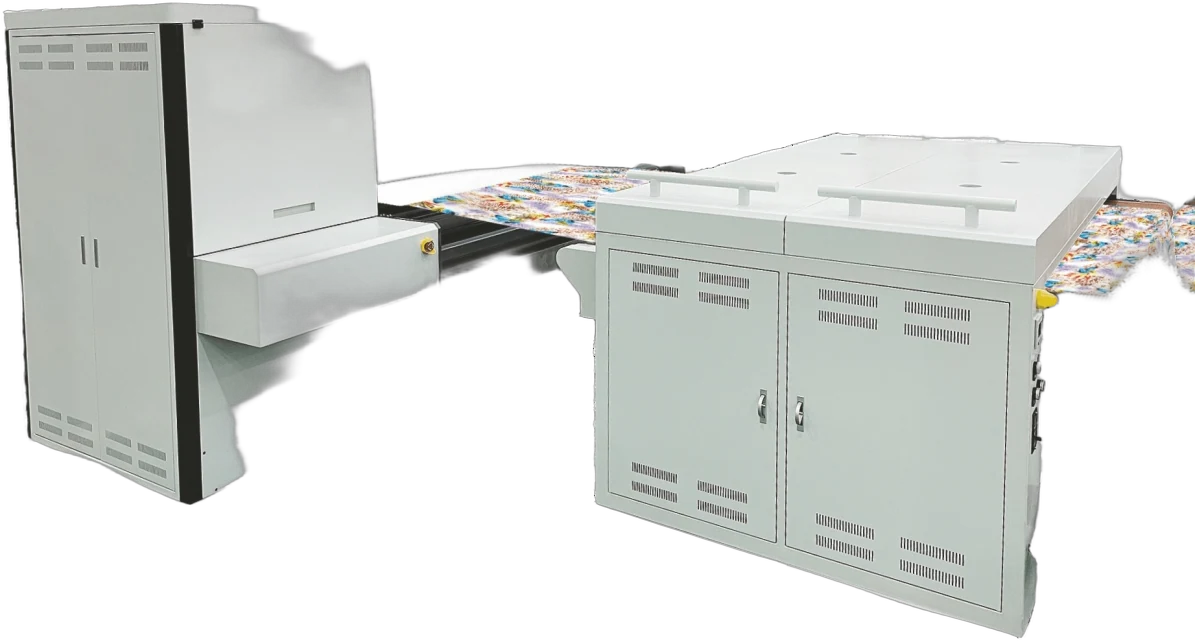
With the steam boiler, steamer and washing line out of the picture, both the initial investment and the production floor space you need shrink. A printer, a fixation unit and an optional pre-treatment unit make up a complete line. Fewer staff are needed to run the line as well.
Water and energy
In the reactive process, most of the water and energy is consumed in steaming and in washing and drying. Pigment has none of these steps, so consumption is limited to printing and curing. For plants with limited wastewater treatment capacity, or those operating within city limits, this alone can be decisive.
Samples and short runs
Changing a design requires no screens or color kitchen. A sample can be shown to the customer as soon as it comes off the fixation unit; there is no waiting for washing and drying. A 50-meter order and a 5,000-meter order start with the same setup time.
One ink for blended fabrics
In cotton-polyester blends, reactive ink dyes only the cotton fiber. Pigment adheres to both fiber types in the same way, so there is no need to set up a separate ink line for blended fabrics.
Pigment's limits: where do you need to be careful?
- Hand feel. The binder film leaves a slight perceptible feel on the printed surface. It is more noticeable on dense, dark grounds. The right ink amount and suitable pre-treatment reduce this feel.
- Rub fastness on dark colors. On very saturated, dark grounds, wet rub fastness can be weaker than with reactive. For apparel fabric, a rub test should be run on every new fabric.
- Curing discipline. Curing is the step that determines wash fastness. If the temperature or time falls short, the binder does not form a complete film and the print deteriorates in the first wash.
- Color vibrancy on cotton without pre-treatment. Cotton is an absorbent fiber; when printed without pre-treatment, some of the pigment is drawn into the fiber and the color looks duller once dry. We cover this in detail in our pre-treatment article.
- Ambient conditions. For stable printhead and ink performance, keep the print room at 20–25 °C and around 65% relative humidity, free of dust and vibration.
Which process for which job?
Pigment excels in: fast sampling in fashion and apparel manufacturing, short and medium-length orders, cotton-polyester blends, home textiles, and plants that cannot install a washing line or face wastewater constraints.
Reactive excels in: dark-ground apparel fabric with very high wet rub expectations, large-series production on 100% cotton, and dye houses already running steaming and washing lines.
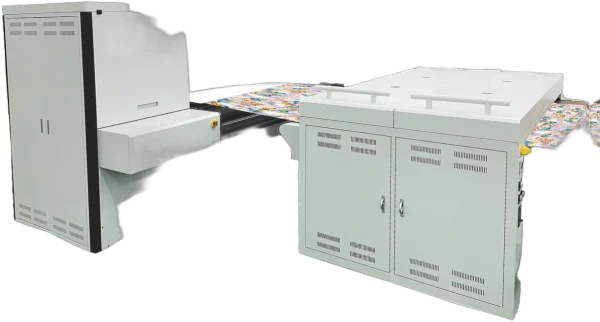
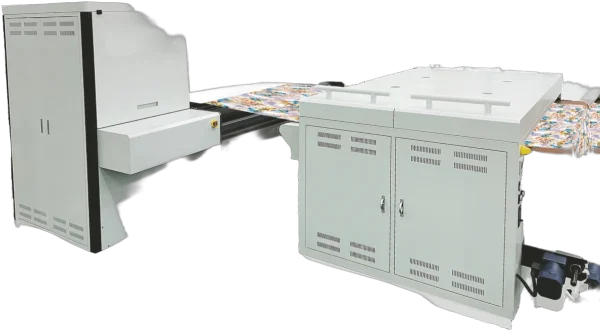
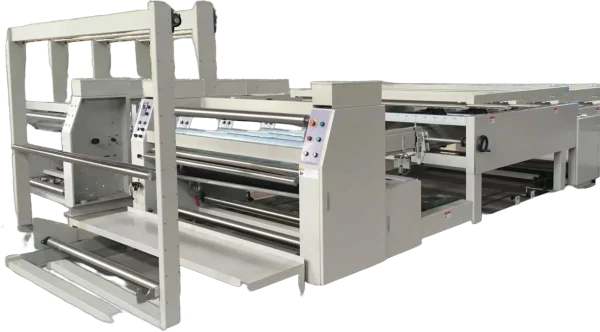
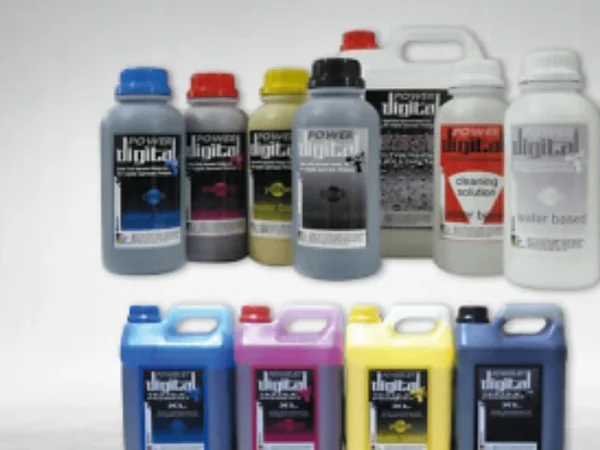
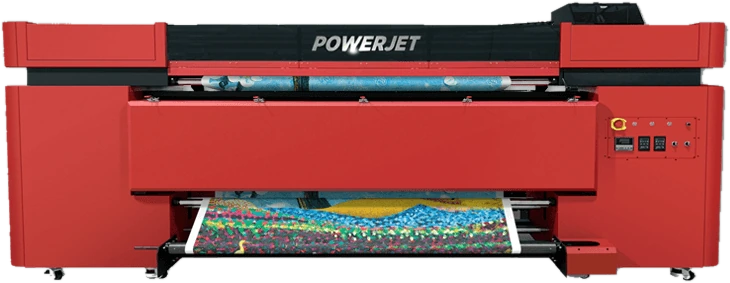
That is why the roll-to-roll Powerjet 190 and Powerjet 260 were designed for pigment: no steaming or washing after printing, only curing. Depending on the number of heads and colors, the 190 cm model reaches 70–560 m²/h in 2 passes. For businesses that want to work with reactive, disperse and acid inks as well as pigment, there is the 320 cm wide Powerjet FP 3200. The 190S-260S pre-treatment unit and the fixation unit complete the line, and we also supply the line's water-based pigment ink.
See it on your own fabric before you decide: send us your fabric, and we will print it with pigment and send it back cured. You can run the wash and rub tests in your own laboratory.
Frequently asked questions
Does digital pigment printing hold up to washing?
It does when cured at the right temperature and for the right time. Curing is the most critical step for wash fastness; follow the ink manufacturer's curing values and run a wash test on every new fabric.
Is pre-treatment required for pigment printing?
No; you can print directly onto prepared-for-print fabric. Pre-treatment is applied to improve color vibrancy, print sharpness and rub fastness, especially on cotton.
Does pigment printing require steaming and washing?
No. In pigment printing, only heat curing is done after printing; there are no steaming, washing or post-wash drying steps.
Can pigment be printed on polyester-blend fabric?
Yes. Because pigment adheres through the binder without forming a chemical bond with the fiber, cotton-polyester blends can be printed with a single ink. For 100% polyester, sublimation or disperse ink is usually preferred.
How much space does a roll-to-roll pigment printing line take up?
As an example, the Powerjet 190 printer measures 370 × 210 × 175 cm and the fixation unit 235 × 155 × 120 cm. With no steaming or washing line, the total footprint is markedly smaller than that of a reactive line.