What Is Grayscale Printing? How Does Variable Drop Technology Work?
Don’t let the name mislead you: grayscale printing has nothing to do with the color gray. It means the head can fire small, medium and large drops within the same design. We explain in plain language how it differs from fixed drop, what gray levels are and the role of RIP software.
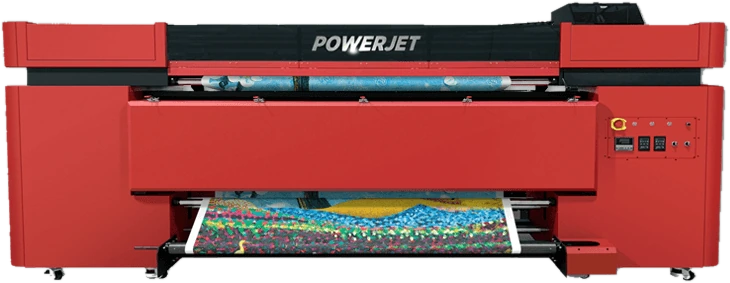
The term “grayscale”, or “grayscale printing”, which appears often in machine brochures, brings to mind black-and-white printing or gray ink when you first hear it. In fact, it has nothing to do with either. Grayscale is the printhead's ability to fire drops of different volumes from the same nozzle. In this article, we explain how it works and why it makes such a difference to the print.
A misleading name: grayscale is not gray ink
Here “gray” does not refer to a color but to an intermediate value. A nozzle either fires a drop or it does not; this is binary operation. A grayscale head, however, has intermediate levels between “none” and “full”: small, medium and large drops. These intermediate levels are called gray levels.
Gray ink is a separate matter: on some machines, a gray ink channel is added alongside CMYK. For example, in its 8-color configuration the Powerjet 190 uses an extended color set that includes a gray channel in addition to CMYK. Gray ink is a color choice; grayscale is a capability of the head. The two can coexist on the same machine.
How does fixed drop (binary) printing work?
On a fixed-drop head, every drop is the same size. To produce a light tone, the software places drops sparsely; for a dark tone, it places them densely. Viewed from a distance, the eye averages these dots and sees a tone.
The problem starts in light tones. As the drops become sparser, the gaps between them become visible and the print looks grainy and dotted. That is why skin tones, skies and soft shadows are where fixed-drop heads struggle most. The industry's first solution was light inks (light cyan, light magenta): light areas were filled with dense light drops instead of sparse dark ones. The price of this solution was extra color channels and higher ink consumption.
Variable drop: different volumes from the same nozzle
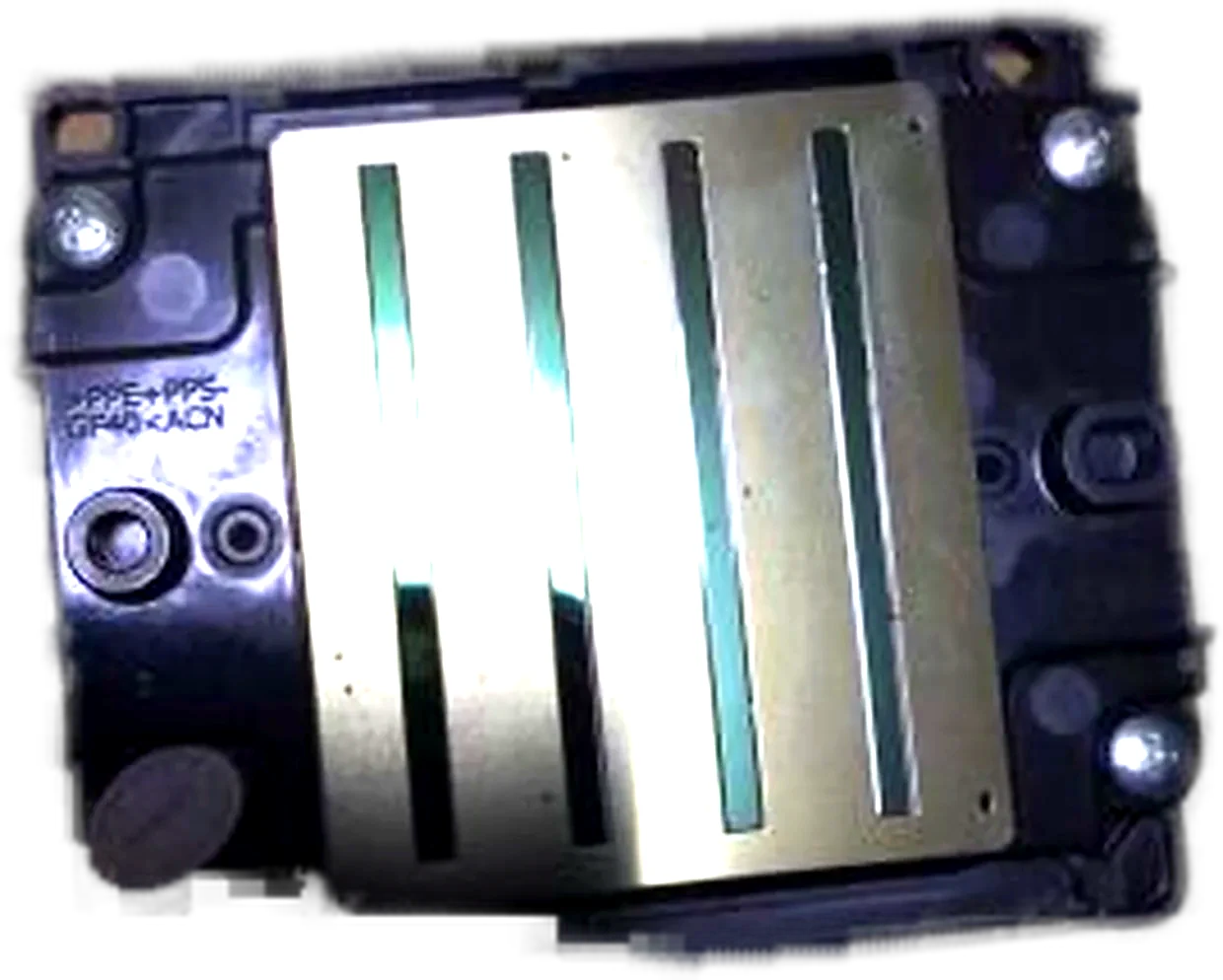
In a piezo head, a drop is formed by an electrical signal applied to the crystal behind the nozzle. When the shape of the signal is changed, drops of different volumes come out of the same nozzle. On most industrial heads, this means four levels: “no drop, small, medium, large”.
For the Ricoh MH5420 head, for example, head distributors and driver board manufacturers quote a grayscale range of 7 pl to 35 pl. The same pixel position can receive a small 7 pl drop when needed, or a drop five times larger when needed. Light tones are no longer built from sparse dots but from small, dense drops; the grain disappears.
Three types of head: fixed, selectable and dynamic
- Fixed drop: the head fires drops of a single size. Tones are built only through drop density.
- Selectable drop: the head can produce drops of different sizes but uses a single size throughout a print. The drop size is chosen at the start of the job and does not change within the design.
- Dynamic grayscale: the drop size changes pixel by pixel within the same design. This is true grayscale, and today's industrial heads work this way.
Seeing “variable drop” in a brochure is not enough on its own; ask whether the drop size changes dynamically within the design.
The role of the RIP: which drop for which pixel?
The head can fire different drops, but it is the RIP software that decides which drop goes to which point. The RIP separates the design according to the color profile and generates a drop map for each pixel:
- Small drop: fine lines, small text and light tones
- Medium drop: skin tones and soft transitions
- Large drop: saturated, large solid areas
The same head can give different results with two different RIPs. That is why the software supplied with the machine is as important as the head. On the roll-to-roll side, the Powerjet 190 and 260 run on NeoStampa, the Powerjet FP 3200 on Maintop (Photoprint optional), and the DTG series on RINN software.
Why is dpi alone not a sufficient measure?
dpi describes how many points per inch the head can place a drop on, in other words the addressable grid. On a fixed-drop head, each point can only be “drop” or “no drop”. On a grayscale head, each point can take four different values. That is why, of two machines with the same dpi, the grayscale one delivers a much finer print in terms of the resolution the eye perceives.
In short, you should compare two machines not by the dpi figure in the brochure but by printing the same design. A single test design containing skin tones, gradients and fine lines shows more clearly than any figure which machine prints better.
We look separately at what grayscale brings to production and cost in our second article.
Frequently asked questions
What is grayscale printing?
It is the printhead's ability to fire drops of different volumes from the same nozzle, pixel by pixel within a design. Light tones are built with small drops and saturated areas with large ones, so the print looks smoother.
What does the number of gray levels mean?
It is the number of different states a nozzle can take. A four-level head uses the values “no drop, small, medium, large”. A fixed-drop head has only two states: drop or no drop.
Does grayscale require special ink?
No. Grayscale is a capability of the head, the driver electronics and the RIP software. The ink only needs to be of a type approved by the head manufacturer.
Are grayscale and gray ink the same thing?
No. Gray ink is a separate channel added to the color set. Grayscale is the head's ability to fire drops of different sizes. The two can coexist on the same machine.
Is grayscale common in textile printing machines?
Yes. The industrial versions of the Ricoh, Epson and Fujifilm Dimatix heads used in today's roll-to-roll and DTG machines support grayscale.