The Benefits of Grayscale Printing: Quality and Savings Without Light Inks
Variable drop technology does not just mean better-looking prints; it also affects the number of color channels, ink consumption, hand feel and print time. We explain plainly what grayscale brings to your business and where its benefits are overstated.
In the previous article we explained how grayscale works: the head can switch between small, medium and large drops pixel by pixel within the same design. In this article, we look at the subject from a business perspective. We go point by point through what a grayscale machine does and does not bring to your production and costs.
1. Smoothness in skin tones, shadows and gradients
In fixed-drop printing, light tones look grainy because they are built from sparse, large dots. With grayscale, the same tone is built from small, dense drops; the eye cannot distinguish the dots, and the tone looks continuous, like a photograph. The difference is most noticeable in skin tones, soft shadows, skies and long color transitions.
The same flexibility helps with detail too: fine lines and small text stay sharp with small drops, while large solid areas are printed full and even with large drops. Achieving both in a single design is not possible with fixed drop.
2. No need for light inks
On fixed-drop machines, the remedy for grain was light inks. Light cyan and light magenta fill light areas with dense light dots instead of sparse dark ones. This has two costs: two extra color channels, and more liquid laid down on the fabric to achieve the same light tone.
A grayscale head builds the same light tone with a small drop of full-strength ink. In many jobs, CMYK delivers photographic quality without the need for light inks. The freed-up channels can instead be used to expand the color gamut. For example, the Powerjet 190 and Powerjet 260 can be configured with 4-color CMYK or an 8-color extended color set. The extra channels are allocated not to light inks but to a set that expands the color gamut.
3. Ink consumption: where do the savings come from?
The savings come from light and mid-tone areas. Because these areas are built with fewer and smaller drops, the ink used per square meter decreases. In dark, saturated solid areas, however, the head uses large drops anyway; do not expect significant savings there.
In pigment printing, ink quantity has another side effect: the binder film. The less ink laid down on the fabric, the softer the hand feel of the printed area, and the easier drying and curing become. In other words, grayscale's savings show not only on the ink bill but also in how the product feels in the hand.
The percentage savings figures published for grayscale were measured on specific test designs and may not match your work exactly. You find the right figure by printing your own design on the same machine in different modes and comparing the RIP's ink reports.
4. Speed and throughput
What mainly determines print speed is the number of passes. Printing in fewer passes increases speed directly but carries the risk of lowering quality. Because grayscale adjusts drop size to the tones, it helps reach acceptable quality in fewer passes.
You can see the effect of pass count on speed clearly in machine specification sheets. Depending on the number of heads and colors, the Powerjet 190 prints at 70–560 m²/h in 2 passes and 45–360 m²/h in 3 passes. Achieving the same quality with one pass fewer means noticeably more meters in the same shift.
5. Repeatable quality
The RIP decides which drop goes to which area based on the characteristics of the design. When the same design is printed with the same profile and the same mode, the result stays consistent from batch to batch. A close match between the print approved at the sample stage and the print coming off series production is, especially for garment orders, at least as important as quality itself.
What not to expect from grayscale
- It does not fix a low-resolution file. If the design file is poor, the print will be poor too.
- It does not replace color management. Without a fabric-specific color profile, you will not get accurate color.
- It does not make up for fabric preparation. On cotton, pre-treatment is still decisive for color vibrancy.
- It does not eliminate maintenance. A clogged nozzle leaves a line, whatever the number of gray levels.
Pre-investment checklist
- Can the head change drop size dynamically within the design?
- How many gray levels and what drop range are used?
- In which print modes does the RIP software supplied with the machine use grayscale?
- At what number of passes was the brochure speed measured?
- Has your own test design, containing skin tones, gradients and fine lines, been printed?
- Has an ink consumption report been obtained for the same design?
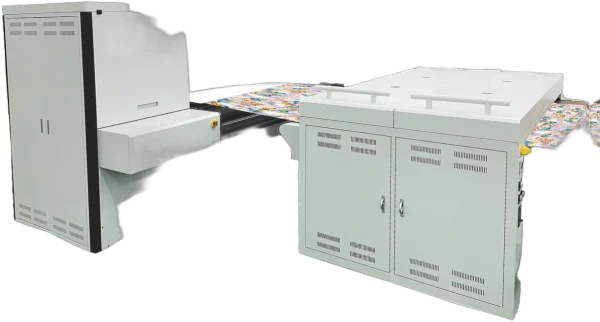
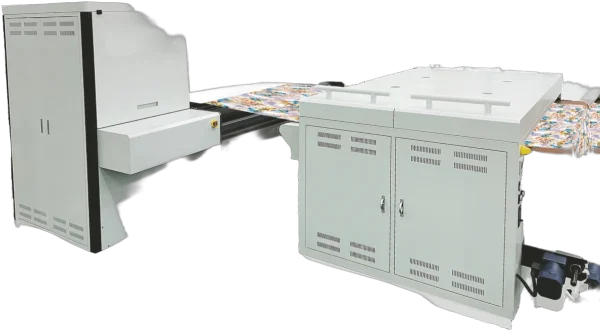
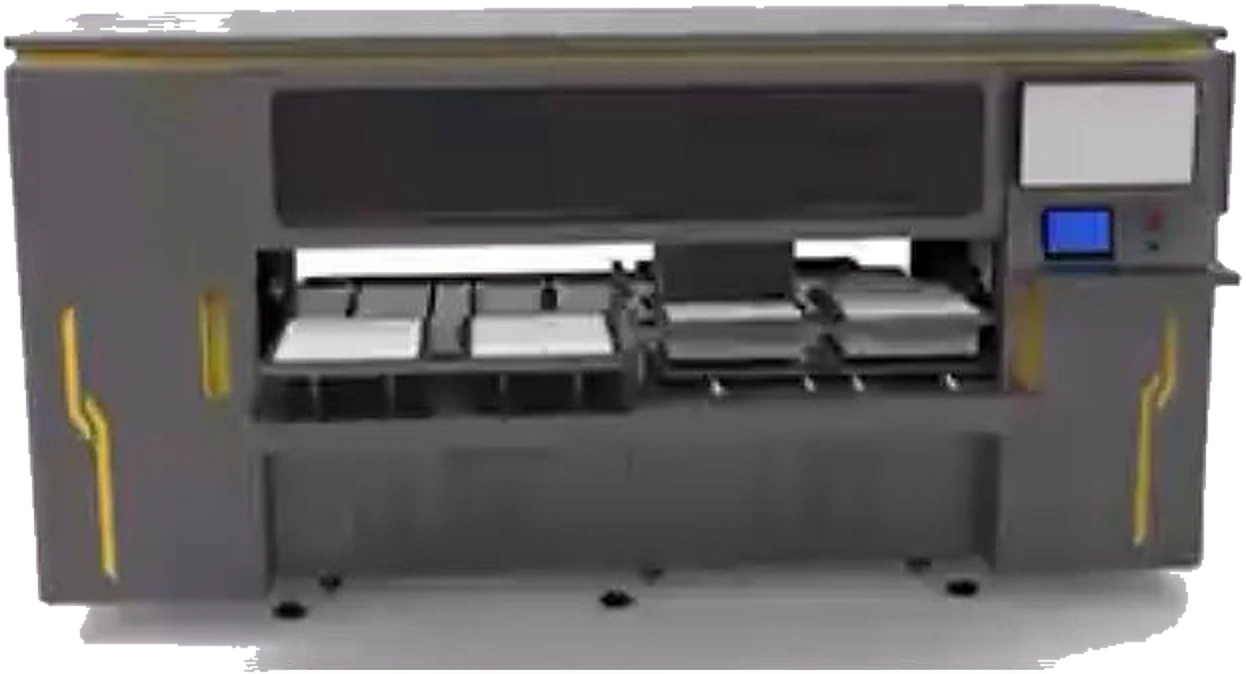
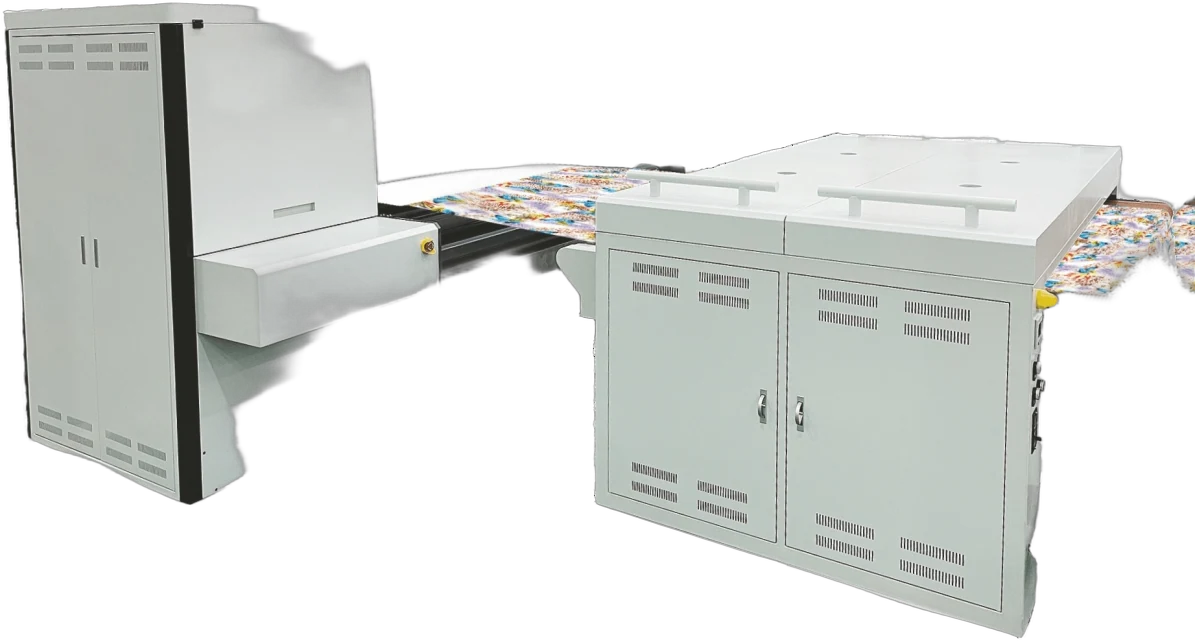
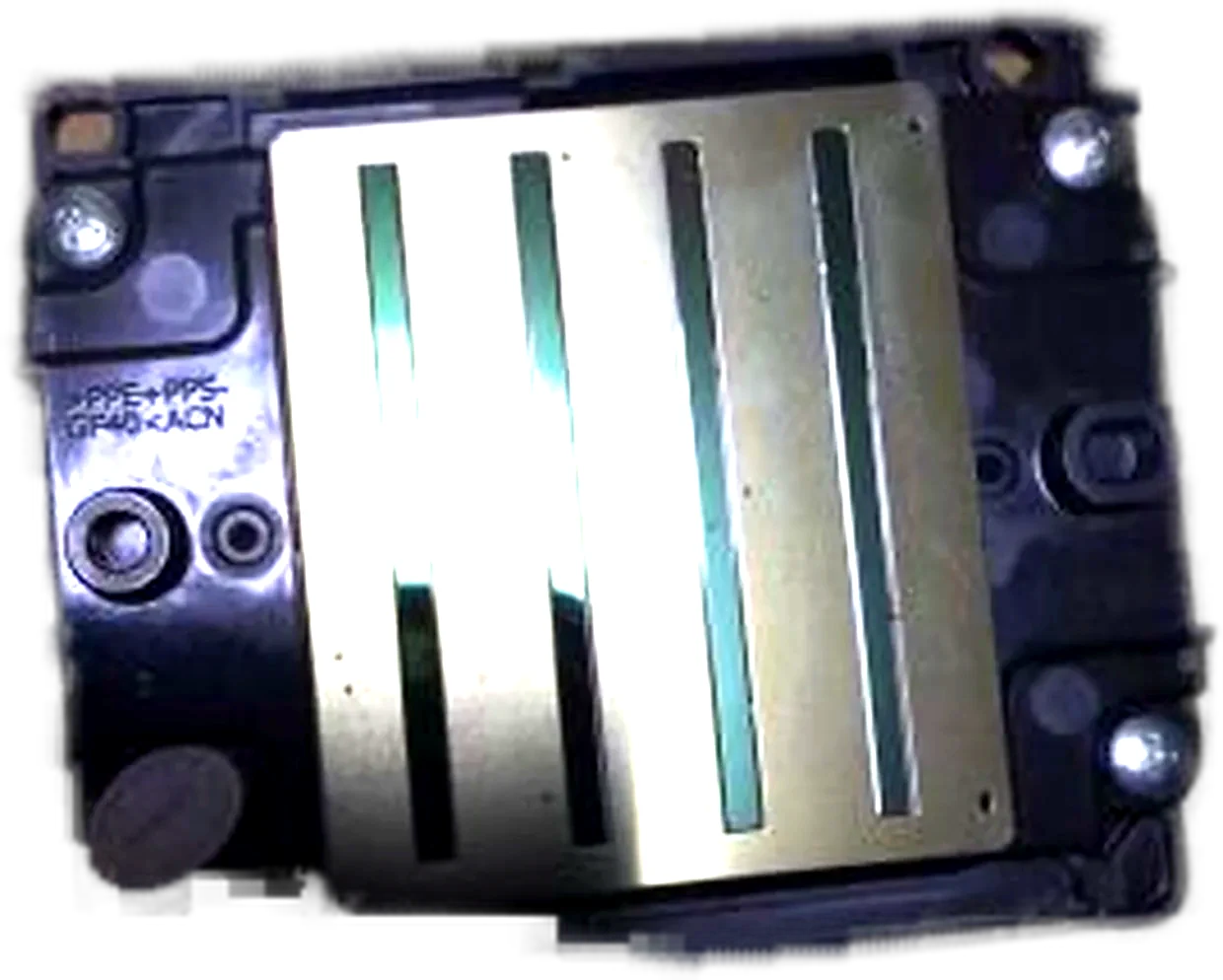
Among the machines on our site, the specification sheet of the 320 cm wide Powerjet FP 3200 explicitly lists grayscale technology and a drop range of 1.5–21 pl. On the T-shirt side, the Powerjet DTG 4T PRO brings the same approach to finished garments with its Epson I3200-A1 heads.
Frequently asked questions
How much ink does grayscale printing save?
It depends on the design. Savings are significant in designs dominated by light and mid tones, and limited in dark, saturated solid areas. The right figure is found by printing your own design in different modes and comparing the RIP ink reports.
Is CMYK enough on a grayscale machine?
For many jobs it is; smooth tones are achieved without the need for light inks. For jobs that require very vivid orange, red or blue tones, an extended color set is preferred.
Does grayscale slow down printing?
Not in itself. Speed is mainly determined by the number of passes, the number of heads and the resolution. Grayscale contributes to speed indirectly by helping reach acceptable quality in fewer passes.
Is grayscale available in T-shirt (DTG) printing?
Yes. The heads used in DTG machines, such as the Epson I3200-A1, work with variable drop technology; the difference is clearly visible in skin tones and photographic prints.
Does grayscale affect hand feel?
Indirectly, yes. Because light and mid tones are built with less ink, the binder film in pigment printing becomes thinner and the printed area stays softer.